From in silico to in vivo: Why development strategy now determines AI-era success

AI is becoming a core component of drug discovery workflows, and machine-learning systems are beginning to analyse vast datasets, design novel molecules, and help optimise clinical development strategies at speeds that weren’t previously possible. According to a Reuters analysis, AI-enabled discovery could reduce early-stage development timelines and costs by half over the next three to five years.
These ambitious expectations are fuelling a wave of investment across our industry as scientists seek to expand what can be explored in molecular design. AI tools are already capable of generating and prioritising compounds at an unprecedented scale, further expanding chemical space beyond what traditional discovery approaches can easily access.
Regardless of how fast discovery accelerates, once a candidate molecule leaves the screen and hits the bench the same constraints still decide its fate. Solubility, permeability, stability, processing limits, and reproducibility determine whether a compound can become a workable dosage form. When that reality surfaces late, it often appears as reformulation, additional scale-up work, and extended timelines.
That is why the early development strategy matters more now. True competitive advantage will come from translating the best candidates into products that can be reliably manufactured and scaled without reshaping the molecule into something less valuable.
Discovery is moving faster than development systems can absorb
AI is expanding what teams can generate and prioritise, but it has not removed the downstream constraints that determine developability. Regulators are already seeing it: the FDA says it has received more than 500 submissions for drugs and biological products that include AI components since 2016, showing AI is already part of regulated workflows.
The economics add pressure. A 2025 RAND analysis estimated that developing a new drug incurs a median R&D cost of $708 million (including cost of capital and failures) and an average of $1.3 billion, pulled upward by high-cost outliers. In that environment, “faster discovery” only creates value if the output can be translated into a viable dosage form without cycles of redesign, reformulation, and revalidation.
Solubility is a clear example. One recent review reported that roughly 70% of active pharmaceutical ingredients and new chemical entities have poor aqueous solubility, which complicates absorption, increases variability, limits formulation options, and tightens manufacturing choices. As AI proposes more structurally novel candidates, teams are running into the same pattern: strong therapeutic rationale, followed by delay while delivery strategy and scale-up feasibility are rebuilt.
The result is that product risk is rising in parallel with discovery output. Programmes that once treated developability as a later-stage exercise are being forced to address it earlier because the cost of getting it wrong compounds with every phase transition.
The real divide: Undruggable biology vs undevelopable products
As AI pushes more candidates into early development, there are two separate barriers:
- Undruggable is biological: The target can’t be reached or meaningfully modulated.
- Undevelopable is pharmaceutical: The molecule may be pharmacologically promising, but formulation, stability, and manufacturability prevent the development of a reliable dosage form.
AI is helping widen what’s “druggable”. The harder hurdle is often developability, which is dictated by physical behaviour and process constraints where delivery expertise matters.
Why does this matter? Many “drug-like” screens weren’t built for today’s chemical space. Historically accepted rulesets still help, but if used too literally can push teams toward the wrong fix, including modifying a strong molecule to make it easier to manufacture while trading potency, selectivity, differentiation, or dosing advantages.
A better default is an early, case-by-case assessment of developability. Decide whether the compound is truly non-viable, or whether it needs a different delivery strategy, excipient system, or processing approach to preserve performance while meeting real-world constraints. Once that call is made, the next question becomes operational: how quickly can teams generate enough evidence to choose a pathway that will hold up as the program scales?
Development proof still requires data, not predictions
AI can speed hypothesis generation and candidate ranking, but viability still requires empirical proof:
- Can the compound reach therapeutic exposure without extreme dosing or unacceptable variability?
- Will it remain stable through processing, storage, and distribution?
- Can it be manufactured consistently under GMP and stay consistent as batch size grows?
Many failure modes don’t appear until the shift from bench to pilot to clinical supply, when operating windows narrow and scale-dependent factors (mixing, shear, thermal history, residence time) change system behaviour. The goal is a development path that still works after scale-up, tech transfer, and validation.
A feedback-loop approach that keeps pace with AI
One of the most effective responses to AI-driven discovery speed is a closed-loop development model that can generate answers quickly without wasting time or scarce API.
In practice, that loop often includes:
- In vitro screening to establish solubility limits, precipitation risk, and stability liabilities under relevant conditions
- In silico PK modelling to translate those constraints into exposure hypotheses and guide formulation strategy
- In vivo confirmation (where appropriate) to validate whether the selected approach improves absorption and reduces variability
This design-test-refine cycle helps prevent costly rework by surfacing developability and manufacturability limitations before timelines and supply requirements lock programs into choices. It also supports API conservation, which is critical when candidates are difficult to synthesise or available only in limited quantities.
Just as importantly, this loop enables a more sponsor-savvy way of working. It produces clearer decision points, clearer trade-offs, and fewer surprises as programs move into later phases.
Why expanding formulation design space matters
More AI-surfaced candidates will need bioavailability-enabling approaches, including advanced amorphous solid dispersions (ASDs). Success depends on whether teams have enough flexibility in excipients and processing windows to build a formulation around the molecule, rather than forcing the molecule into a narrow manufacturing palette.
Many conventional methods are limited by solvent compatibility, thermal exposure, and excipient constraints, which become more punishing as molecules grow more complex or sensitive. As a result, approaches that widen the formulation toolbox are gaining more attention. Solvent-free fusion processing is one example, which demonstrates how alternative processing enables formulations that reduce reliance on solvents and limit thermal exposure compared to some traditional routes.
The strategic takeaway is vendor-neutral: as molecular complexity rises, programmes need enabling technologies that expand formulation design space, reducing the likelihood that sponsors have to compromise the molecule simply to make the process work. Highly tailored, multi-component dispersions can also be harder to replicate, supporting defensibility as composition-of-matter protection matures.
Deliverability will define competitive advantage
As discovery becomes faster and more accessible, the differentiator shifts downstream. The teams that succeed will be those that bring manufacturability considerations forward, choose development pathways that hold through scale-up, and use feedback-loop execution to reduce rework and preserve asset value.
AI can help find more candidates. It can even help teams see biology in a different way. But it cannot yet eliminate the physical constraints of formulation, processing windows, and reproducible manufacturing. In the coming era, the advantage will belong to organisations that can translate digital promise into drug products that are reliably manufactured, scaled, and delivered without diluting what made the molecule worth pursuing.
In short, designing the molecule is becoming easier. Delivery remains the hard part, and the part that determines which therapies reach patients.
About the author
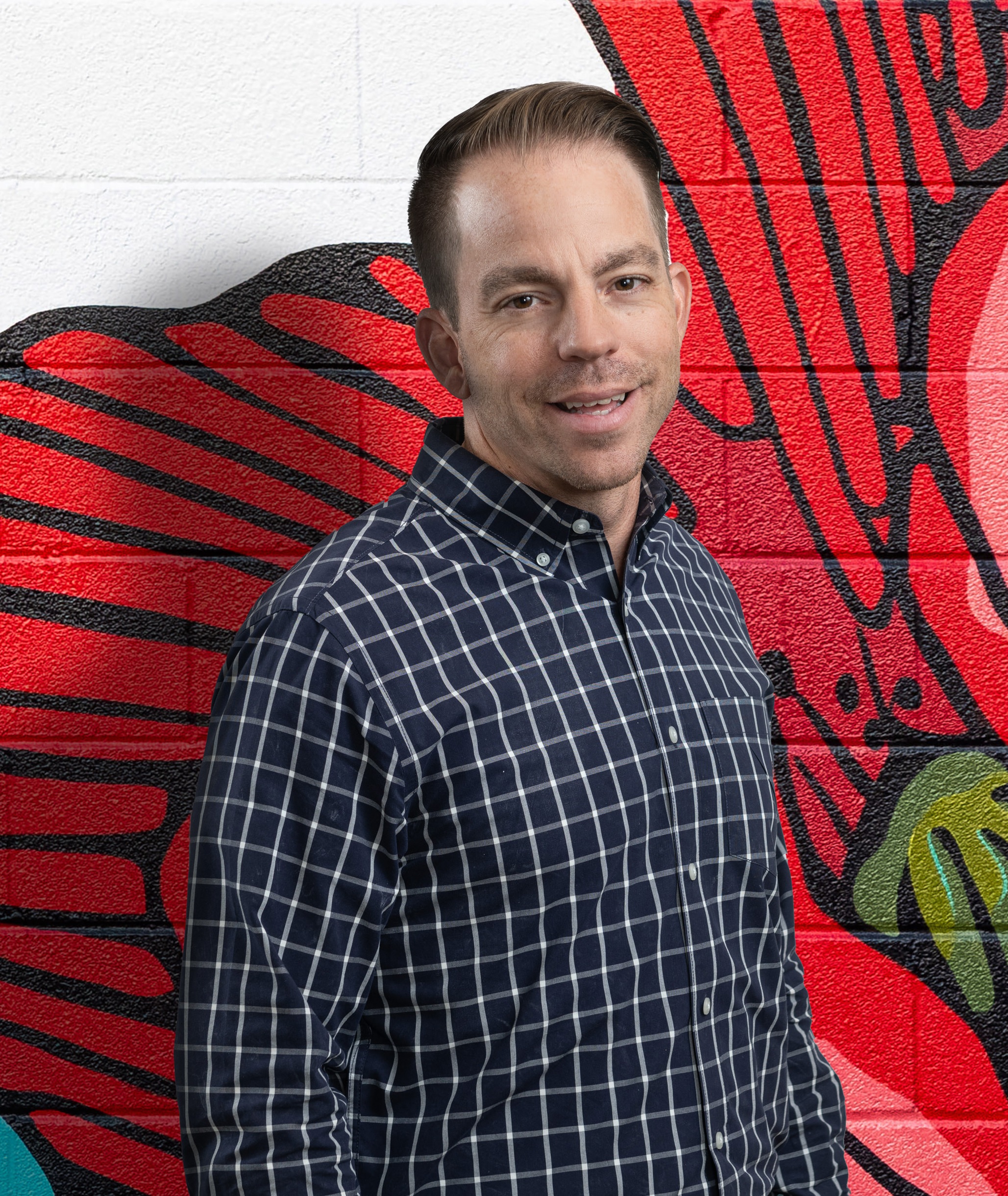
Dr Dave Miller currently serves as chief scientific officer at AustinPx, where he leads their pharmaceutics and analytical development teams and oversees the application of the KinetiSol Technology, which he co-invented. Dr Miller specialises in formulation and processing technologies for improving the oral bioavailability of insoluble small molecules. He has applied his expertise towards advancing numerous drug candidates through all stages of development, from early discovery to line extensions, and he has published over 40 research articles in peer-reviewed journals, authored eight book chapters, and is co-editor of the First, Second, and Third Editions of the textbook, “Formulating Poorly Water-Soluble Drugs.” Dr Miller holds a BSc in Chemical Engineering and a PhD in Pharmaceutics from the University of Texas at Austin.